
Hostel Furniture
What Hostel Furniture Is Essential for Comfortable, Durable and Space-Saving Student Accommodation in Hyderabad?
VM Furnitures understands that selecting the right furniture is essential for creating comfortable, organized, and functional student accommodation. From sturdy beds and ergonomic study tables to practical wardrobes and space-saving storage units, well-planned hostel furniture helps make the best use of available space while supporting students’ daily routines. For hostel owners, educational institutions, and accommodation providers, choosing suitable Hostel Furniture in Hyderabad involves considering durability, comfort, safety, maintenance, and long-term value.
Why Is the Right Hostel Furniture Important?
Hostel furniture must support multiple students, frequent daily use, and changing accommodation needs. Unlike furniture used in individual homes, hostel furniture is generally used more intensively and needs to withstand regular movement, cleaning, and wear.
The right furniture helps create an environment where students can sleep comfortably, study efficiently, store their belongings, and maintain personal organization. It also helps hostel administrators manage available space and plan rooms according to occupancy requirements.
When choosing furniture, consider the room dimensions, number of students, ventilation, circulation space, and intended usage. A practical layout should provide sufficient space for movement without overcrowding the room.
What Furniture Is Essential for Student Hostels?
A functional hostel room usually requires a combination of sleeping, studying, storage, and shared-use furniture. The exact selection depends on the room size, accommodation type, student capacity, and available budget.
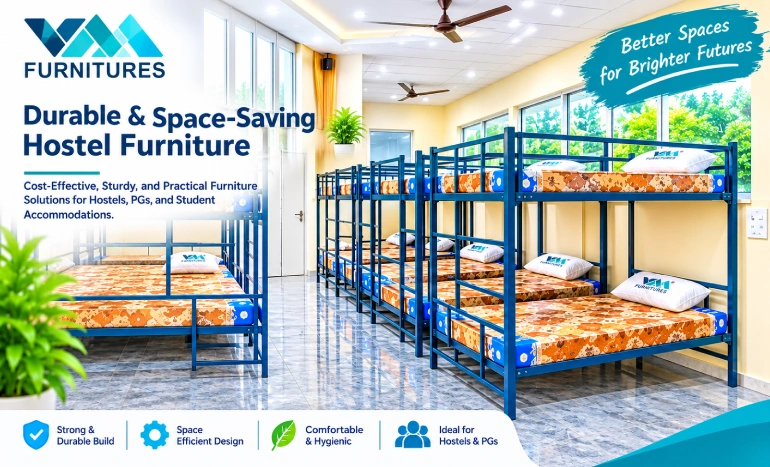
Hostel beds are among the most important furniture items because students need a stable and comfortable place to rest. Bunk beds can boost sleeping capacity in areas with limited floor space, whereas single beds might be appropriate for large rooms.
When selecting beds, evaluate frame strength, mattress compatibility, structural stability, edge finishing, and ease of cleaning. Properly designed bunk beds should include suitable guardrails for upper bunks and a safe access ladder or integrated steps.
For hostels with multiple occupants, standardized bed designs can simplify room planning, maintenance, and future replacement.
Study Tables and Chairs
Students need a dedicated area for reading, assignments, online classes, and examination preparation. Hostel study tables and chairs should provide sufficient working space and comfortable seating for regular use.
Choose tables with practical dimensions, stable legs, durable surfaces, and enough clearance for books, laptops, and stationery. Chairs should offer appropriate seat height, back support, and a stable base.
Where individual desks are not practical, shared study tables may work well in designated study rooms. However, the layout should provide sufficient personal workspace and prevent unnecessary crowding.
Wardrobes and Storage Furniture
Wardrobes and storage units help students organize clothes, books, footwear, bags, and personal belongings. Suitable storage reduces clutter and keeps rooms easier to clean.
Depending on the available area, hostel owners can consider individual wardrobes, compact cupboards, under-bed drawers, wall-mounted shelves, or shared storage cabinets. Lockable compartments may also be useful for personal items.
Storage furniture should have smooth edges, reliable hinges, durable handles, and easy-to-clean surfaces. The doors and drawers should open without obstructing beds, desks, or walkways.
Common-Area Furniture
Hostels may also require furniture for reception areas, dining spaces, lounges, and shared study rooms. Dining tables, benches, waiting chairs, and communal seating should be selected according to the number of users and the frequency of use.
Furniture in shared spaces should be stable, easy to maintain, and appropriate for the activity. For example, dining furniture needs surfaces that can be cleaned regularly, while lounge seating should support comfortable everyday use.
Important Characteristics of Hostel Furniture
Hostel administrators should consider factors other than initial cost and look when considering furniture selections. The following features can help determine whether a product is suitable for student accommodation.
- Durable construction: Frames, joints, and support structures should be appropriate for frequent use.
- Space-efficient design: Furniture should fit the room without restricting movement or access.
- Student comfort: Beds, chairs, and desks should support their intended daily activities.
- Easy maintenance: Surfaces should be practical to clean and maintain.
- Safety-focused design: Furniture should have stable construction, smooth edges, and suitable protective features.
- Functional storage: Cupboards, shelves, and drawers should provide useful organization.
- Consistent dimensions: Standardized furniture can simplify room layouts and replacement planning.
- Practical finishes: Finishes should suit the environment and withstand the expected level of use.
These characteristics assist hostel owners in choosing furniture that strikes a balance between long-term running needs, usefulness, and esthetics.
What Advantages Do Space-Saving Hostel Furnishings Offer?
Space-saving furniture is particularly useful when several students share one room. It allows hostel operators to use available floor area more efficiently while maintaining a functional living environment.
Better Use of Floor Space
Bunk beds can provide two sleeping spaces within a smaller floor footprint than two separate beds. This arrangement may leave more room for desks, wardrobes, and clear walking paths.
Improved Room Organization
Compact wardrobes, under-bed storage, and vertical shelving help keep personal belongings organized. Keeping items off the floor also makes routine cleaning easier.
More Practical Study Areas
Wall-mounted shelves, compact desks, and appropriately sized chairs can create useful study spaces without filling the entire room with furniture.
Greater Layout Flexibility
Modular furniture and standardized units can make it easier to arrange rooms according to different dimensions or occupancy requirements. Before purchasing, hostel owners should confirm that the furniture dimensions work with doors, windows, electrical outlets, and existing fixtures.
Space-saving furniture should never compromise safe access, ventilation, comfortable movement, or the safe use of upper bunk beds.
Technical Specifications to Consider Before Purchasing
The technical specifications of hostel furniture should match the intended application, room dimensions, expected usage, and maintenance plan. There is no single specification that suits every hostel.
Materials and Frame Construction
Furniture may be manufactured using metal, solid wood, engineered wood, or combinations of these materials.
- Metal frames: Often suitable for beds and other furniture requiring a rigid structural frame. The coating, weld quality, joints, and corrosion protection should be assessed.
- Solid wood: Can provide a substantial structure and a traditional appearance, depending on the wood species and construction.
- Engineered wood: Commonly used for wardrobes, desks, shelves, and storage units. Its suitability depends on board quality, thickness, edge protection, and resistance to the moisture expected in the installation environment.
The best material depends on the furniture type, budget, expected service conditions, and maintenance requirements.
Dimensions and Space Requirements
Measure each room before ordering. Confirm the overall dimensions of beds, bunk beds, tables, chairs, wardrobes, and storage units.
Also check mattress sizes, desk working areas, wardrobe door clearance, chair movement, and access to windows and doors. For bunk beds, review the manufacturer's guidance on mattress thickness, guardrails, ladder placement, and safe access.
Load Capacity and Structural Stability
Ask suppliers for applicable load-capacity information and product specifications. Beds, chairs, and storage units should be appropriate for their intended loads and use.
Inspect joints, fasteners, welds, support legs, and connection points. Bunk beds should be installed according to the manufacturer's instructions and checked periodically for loosened fittings or damage.
Finishes, Hardware, and Maintenance
Furniture finishes should suit the room environment and cleaning routine. Metal components may require suitable corrosion-resistant coatings, while wooden and engineered-wood surfaces need appropriate edge finishing and protection.
Check the quality of hinges, handles, drawer runners, screws, and other fittings. Confirm whether replacement parts and maintenance guidance are available.
Applications of Hostel Furniture
Student hostel furniture is used in a variety of accommodation settings, with different requirements for capacity, privacy, durability, and storage.
- College and University Hostels: Educational campuses generally need beds, study desks, chairs, wardrobes, and shared-area furniture. Standardized furniture can help maintain consistency across multiple rooms and buildings.
- Private Student Hostels: Private hostels may need flexible furniture arrangements for rooms with different occupancy levels. Durable, easy-to-maintain products can help simplify day-to-day management.
- Boys' and Girls' Hostels: Furniture requirements depend on the room layout, student capacity, storage needs, and accommodation policies. Secure storage, appropriate bed arrangements, and clear movement areas are important considerations.
- Paying Guest Accommodation: PG accommodation may have limited floor space and varied room dimensions. Compact beds, practical wardrobes, and multifunctional storage can help create a more organized environment.
- Training Centres and Residential Institutions: Training institutes and other residential facilities may require furniture for sleeping rooms, study areas, dining halls, and common spaces. Selection should reflect how frequently each area is used and the activities it supports.
How to Choose Hostel Furniture Manufacturers and Suppliers in Hyderabad
Choosing a suitable supplier is an important part of planning a hostel furnishing project. Hostel Furniture Manufacturers in Hyderabad and Hostel Furniture Suppliers in Hyderabad may offer different product ranges, materials, customization options, and delivery arrangements.
Before making a decision, consider these factors:
- Product range: Check whether the supplier offers beds, bunk beds, study tables, chairs, wardrobes, and related furniture.
- Material details: Ask about frame materials, board types, finishes, fittings, and construction methods.
- Customization: Confirm whether sizes, layouts, finishes, or storage configurations can be adjusted to suit your rooms.
- Product specifications: Request dimensions, load-capacity information where relevant, installation requirements, and maintenance instructions.
- Quotation clarity: Compare product quantities, material specifications, transportation, installation, and any applicable additional charges.
- Delivery planning: Confirm lead times, delivery arrangements, and how furniture will be moved into the building.
- After-sales support: Ask about warranty terms, replacement fittings, repair support, and the availability of spare parts.
Requesting a detailed quotation helps ensure that different suppliers are being compared on equivalent products and specifications rather than price alone.
Practical Tips for Planning a Hostel Furniture Budget
A furniture budget should account for more than the purchase price. Consider the complete cost of furnishing the rooms and maintaining the products over time.
Start by preparing an inventory based on room occupancy. List the number of beds, desks, chairs, wardrobes, and common-area items required. Next, compare materials and specifications that meet the project's requirements.
Consider durability, ease of repair, cleaning needs, installation, transportation, and replacement-part availability. Lower-priced furniture may not always offer the best long-term value if it requires frequent repairs or replacement.
Ordering standardized furniture in appropriate quantities may simplify procurement, but bulk orders should still be checked for dimensions, finish consistency, and product quality. Review samples or product details before confirming a large order.
